The Antistatic Protocol Link That Gets Left Out of the Production Floor
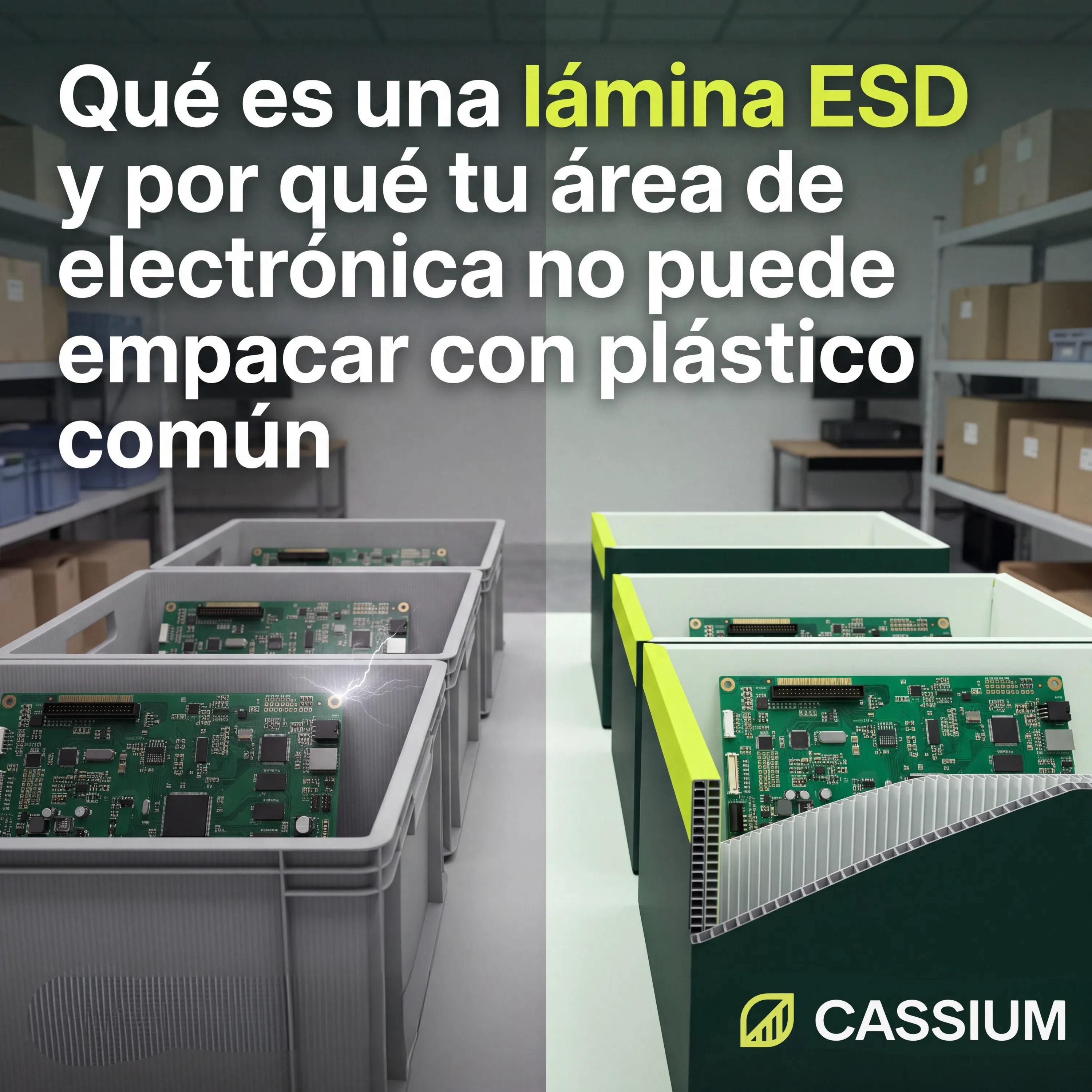
A well-implemented antistatic protocol controls charge on every surface that touches the component while it's on the line. The problem shows up right when the component leaves that line and enters the packaging process, because that's where many plants stop applying the same standard, using the generic corrugated plastic used for the rest of the plant's inventory.
Why Common Corrugated Plastic Can Damage a Component Without Anyone Noticing
Standard corrugated plastic is formulated for strength and handling, not for electrostatic charge control. In contact with the component, it can generate or accumulate enough charge to cause a discharge that damages internal circuits without leaving any visible mark on the housing. The component looks intact and fails later, in the end customer's hands, far from your plant and your quality control.
What Makes an ESD Sheet Different from Standard Corrugated Plastic
Charge Dissipation Instead of Isolation
An ESD sheet incorporates additives that let electrical charge dissipate in a controlled way through the material, instead of building up on the surface the way it does with common plastic. That controlled dissipation is what prevents a discharge capable of damaging the component in contact with it.
Consistent Antistatic Properties Across the Entire Packaging Surface
It's not enough for the material to have antistatic properties at one spot: the entire sheet needs to maintain that property uniformly, because the component can touch any area of the tray or separator during handling and transport.
What Happens If You Keep Packaging Sensitive Components with Common Plastic
The risk isn't immediate or always visible at your plant: the component ships, passes quality control, and fails later, generating returns, warranty claims, and in the worst case, the loss of a customer who can't trace the real origin of the defect back to the packaging. We manufacture the ESD variant across the same 2 to 6 mm gauge range as the rest of our catalog, at our Monterrey plant, so your line's antistatic protection doesn't stop right before the product leaves your plant.