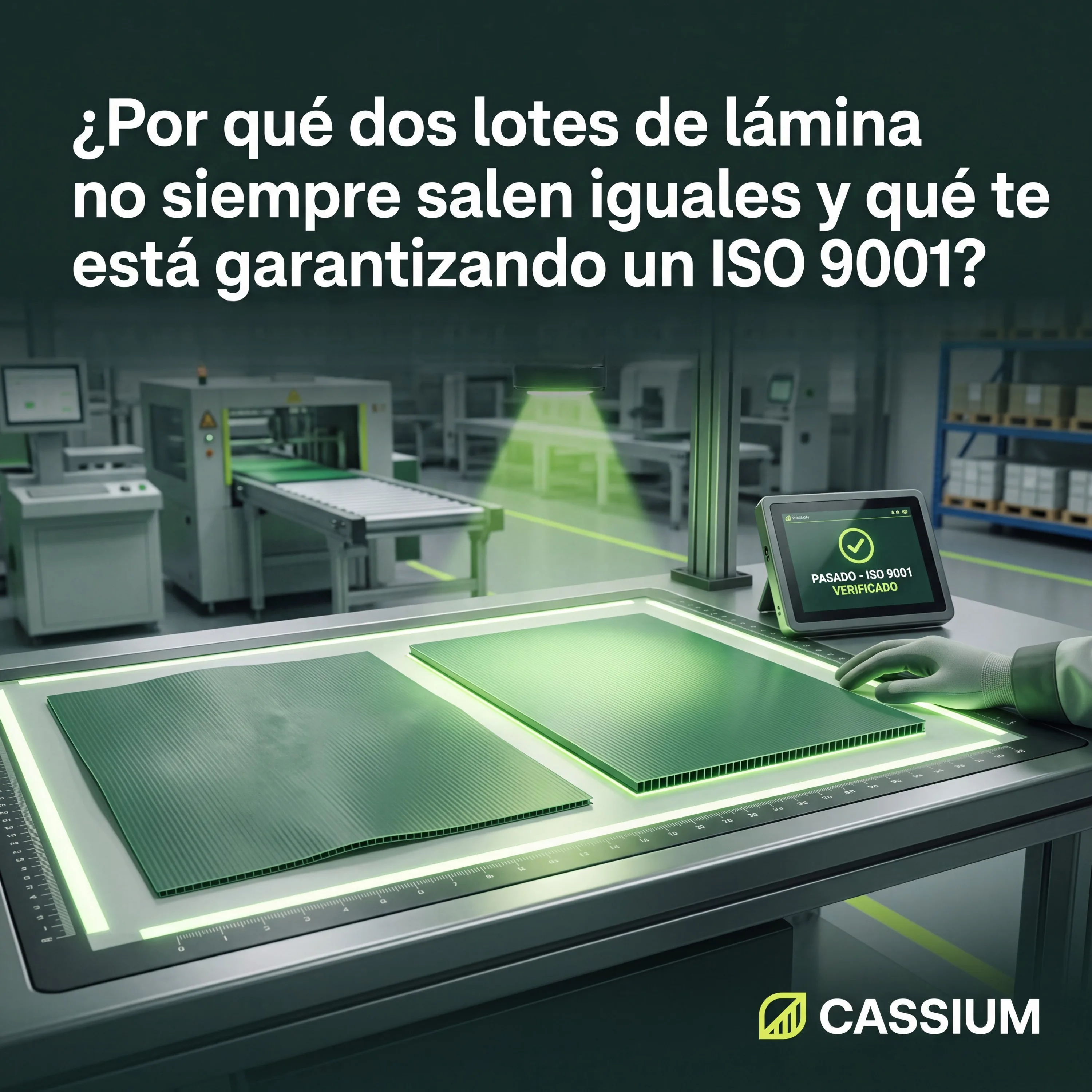
Why Two Batches of the Same Material Can Feel Different
A corrugated polypropylene sheet isn't a handmade artisanal product, but it isn't immune to variation either if the manufacturing process isn't rigorously controlled on every run.
Raw Material Variations Between One Run and Another
The polypropylene entering the extrusion process can vary slightly between one raw material batch and another, even coming from the same supplier. Without a control that verifies that raw material before it's used, those small variations pass directly into the finished product.
Process Adjustments in Extrusion That Affect Gauge and Rigidity
Temperature, extrusion speed, and other process parameters affect the sheet's final gauge and rigidity. A process with no documented control can shift those parameters subtly from one run to another, with no one recording or catching it until the customer notices the difference.
What an ISO 9001 Certification Actually Guarantees in Sheet Manufacturing
A real ISO 9001 functions as a quality management system that documents and verifies the process from start to finish, far beyond a certificate framed on the wall at the plant's front desk.
Documented, Repeatable Processes, Not Verbal Promises
The certification requires the manufacturing process to be documented in enough detail to repeat consistently, without depending on the memory or individual judgment of a specific operator. That documentation is what makes one batch resemble the last, regardless of who's running the line that day.
Quality Control Verified on Every Batch, Not Just in Annual Audits
A certified quality management system includes quality checks on every production batch, not just during the annual audit that renews the certification. That constant verification is what catches a deviation before the batch leaves the plant, not after the customer notices it. A supplier who only reviews their process once a year, for the recertification audit, leaves entire months of production without that same level of scrutiny.
What to Ask Your Supplier When You Notice a Variation Between Batches
When you notice a variation between batches, there's concrete information you can request from your supplier before assuming it's normal or that nothing can be done about it.
Ask for the Quality Control Record of That Specific Batch
A supplier with a real quality system can give you the quality control record for the specific batch you received, with the gauge, color, and other variable measurements verified during that run. The absence of that record is itself a sign that quality control never reached the individual-batch level.
Compare Against the Spec Sheet, Not Just Your Perception
Your perception that the material feels different is a valid starting point, but comparing it against the product's spec sheet, gauge, weight, tolerance range, confirms whether the variation falls within what's expected or represents a real deviation outside spec.
How Cassium Controls Consistency Between Batches
At Cassium we control consistency between batches on two concrete fronts of our manufacturing process.
Our Own Extrusion, With No Dependence on Third Parties for Base Raw Material
We manufacture our sheet with our own extrusion at our Monterrey plant, which lets us directly control the process that determines the material's final gauge and rigidity, without depending on an intermediate third party that introduces variables outside our control.
Gauge and Color Verification on Every Production Run
Every production run goes through gauge and color verification before being released as finished product, under our ISO 9001:2015 certified quality management system. That verification backs up our commitment to the same quality in every batch, not just as a marketing line but as a documented process. When a customer asks about the consistency of a specific order, that verification is what lets us answer with data from the real batch, not a general assumption about the process.
If your company has noticed variations between corrugated sheet batches and your current supplier can't show you documented quality control evidence by batch, at Cassium we can show you exactly how we verify every run before it leaves our plant.