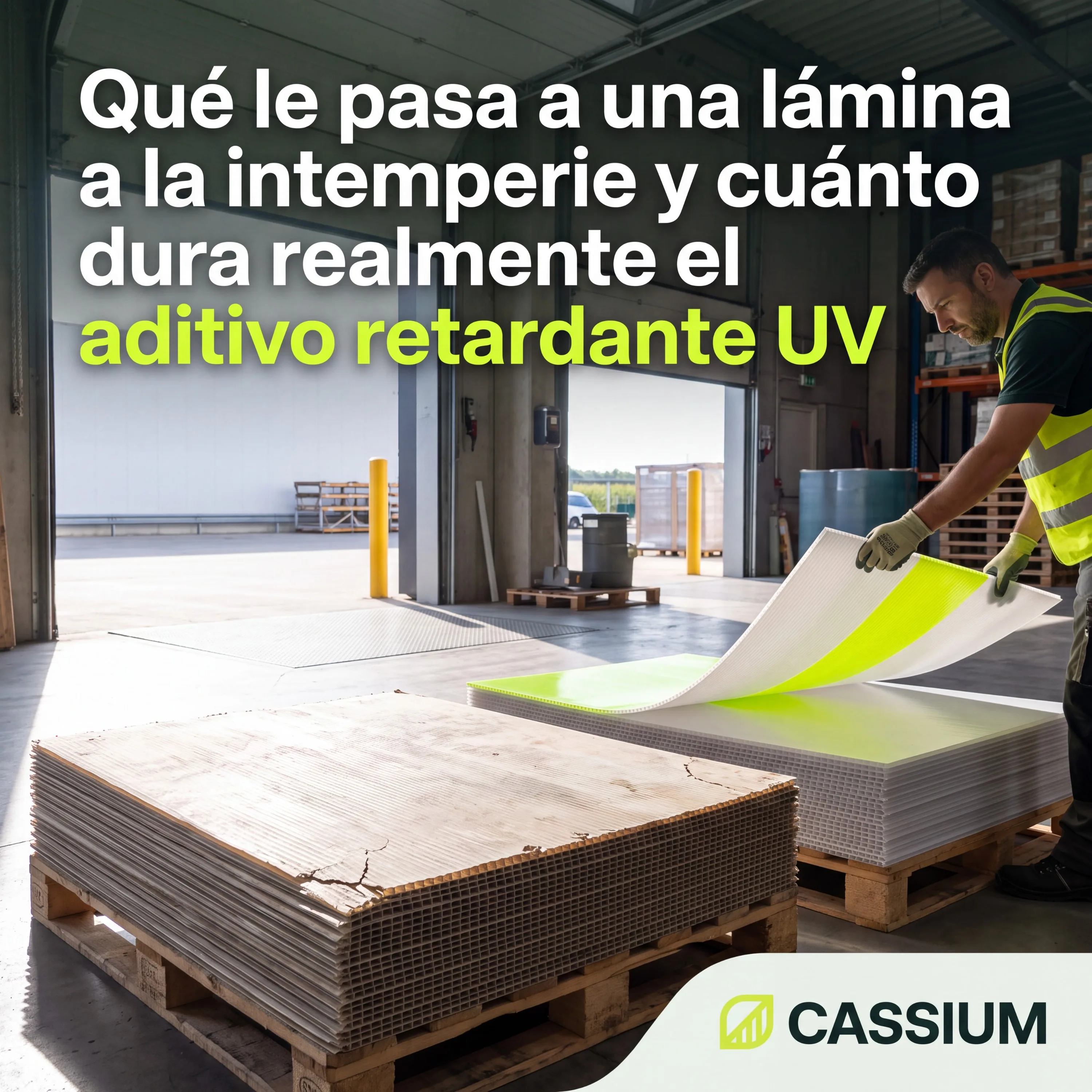
Why Unprotected Corrugated Plastic Breaks Down Outdoors
Ultraviolet radiation gradually breaks down the polypropylene's molecular chains at the material's surface, a process known as photodegradation. The visible result is plastic that loses flexibility, turns dull, and ends up fracturing under pressure it used to withstand without any problem. That deterioration keeps advancing even while the material still looks fine during the first months of exposure.
Why the Damage Doesn't Show Until It's Already Too Late
Photodegradation starts at the material's surface and works its way inward progressively, so the plastic can keep looking functional for weeks while it has already lost a significant part of its mechanical strength. By the time the deterioration finally becomes visible, the part is already much closer to failing than its appearance suggests.
What the UV Retardant Additive Does and How Much Lifespan It Adds
The UV retardant additive acts as a barrier that absorbs or blocks a large part of the ultraviolet radiation before it reaches the polypropylene's molecular chains, significantly delaying the onset of photodegradation. The real lifespan it adds depends on the intensity and consistency of each application's sun exposure, so the exact timeframe varies between a facade installation and one in open field conditions.
How to Know If Your Application Really Needs the UV Variant
If the part will be exposed to the sun permanently or almost permanently, like outdoor signage, construction structures, or agricultural protection, the UV variant stops being optional. If exposure is occasional or the material will be sheltered most of the time, the standard variant may be enough. We manufacture both variants at our Monterrey plant; before quoting, tell us how long your part will be directly exposed to the sun so we can recommend the right additive.