
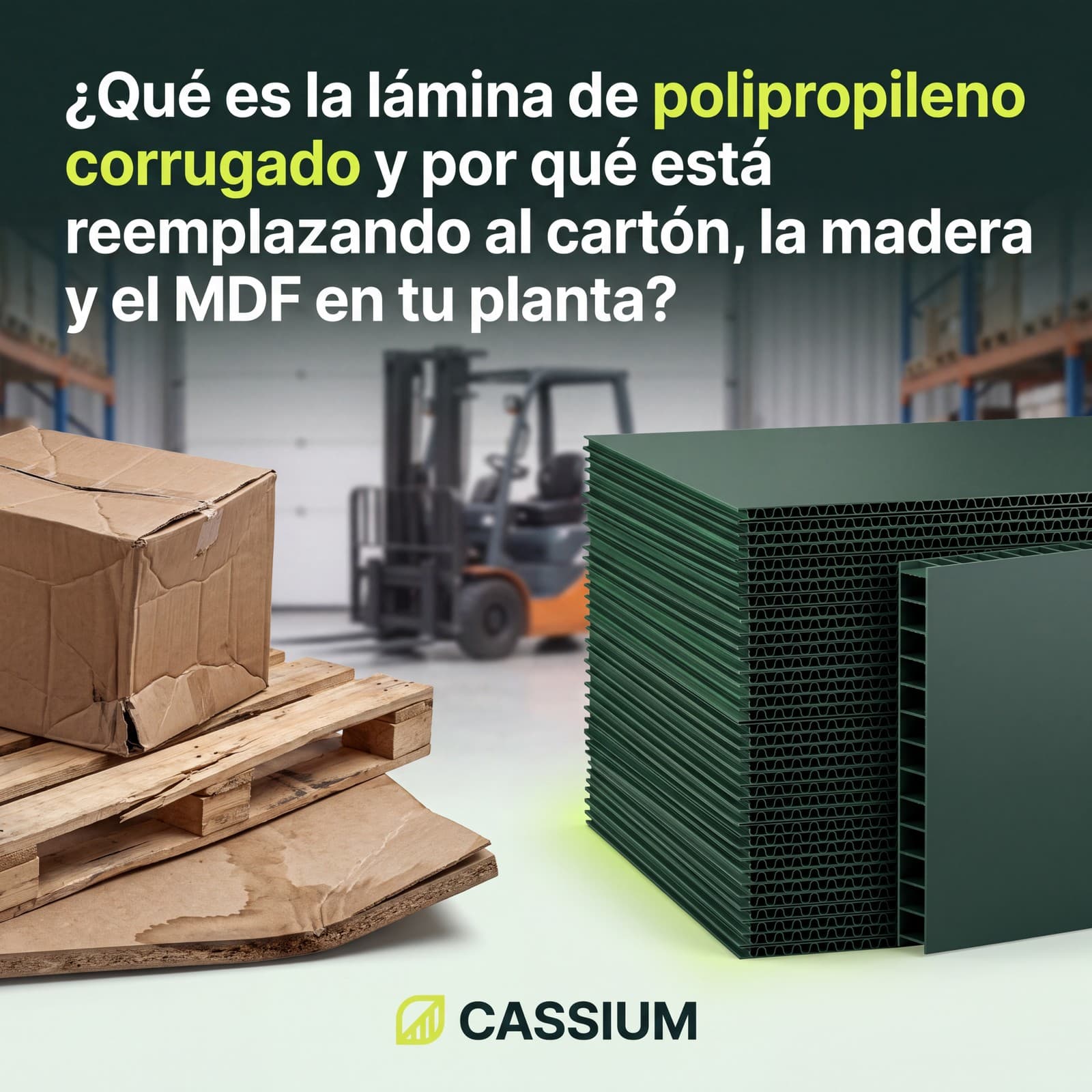
The Structural Problem With Cardboard, Wood, and MDF That No One Fixes in Time
Cardboard weakens with humidity. Wood splinters, weighs more than necessary, and requires phytosanitary treatment for export. MDF absorbs moisture and loses rigidity over time. All three materials share the same underlying problem: they were designed for limited use, not for the repeated cycles of rough handling an industrial plant demands.
Why the Real Cost Isn't in the Purchase Price
Cardboard packaging costs less per unit, but it gets replaced after one or two uses. That constant replacement cost, added to damaged product and lost operating time reordering material, ends up exceeding the investment in a material that lasts many more cycles.
What Corrugated Polypropylene Sheet Actually Is
It's a plastic sheet with a fluted internal structure, similar in appearance to corrugated cardboard, but manufactured in polypropylene through extrusion. That internal structure gives it rigidity without adding excessive weight, and the material itself is immune to moisture because it isn't a cellulose fiber like cardboard or wood.
Why It Withstands What Cardboard, Wood, and MDF Can't
Polypropylene doesn't absorb water, doesn't splinter, and doesn't lose structural rigidity over time in use. A properly specified sheet withstands repeated handling, warehouse humidity exposure, and wash cycles without degrading the way a cellulose material does.
Which Industries It's Replacing Traditional Materials In
We manufacture the sheet in Monterrey in gauges from 2 to 6 mm, in Standard and Agave variants, with UV-resistant additive and ESD anti-static options, for sectors ranging from automotive and logistics to food, beverage, pharmaceutical, manufacturing, electronics and batteries, construction, and printing. Each sector replaces a different material: automotive replaces wood dunnage, logistics replaces cardboard boxes that fail in closed-loop operations, and electronics replaces common packaging with the ESD variant that protects static-sensitive components.